
For my drone field test, I bought two drones.
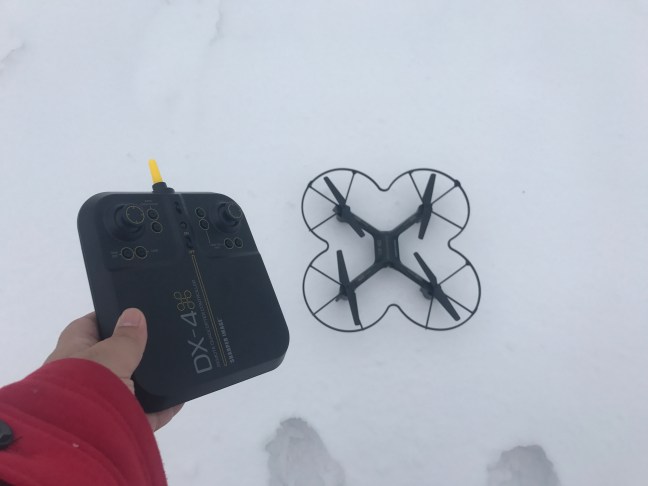
The first was a Sharper Image DX-4 14.4-inch HD Video Drone. The $199 aircraft was on sale for $99, and with holiday/cyber sales, I snagged it for $69.
I chose the drone for a few reasons besides its low cost:
*The live streaming feature would record flights directly to my smart phone, and also allow me to see and record the drone’s footage as it flies instead of downloading it after it lands.
*Its 1080 HD panoramic video, I believed, would increase the chance of getting publishable images from live drone video.
*Automatic hover stabilization to help ensure publication-quality shots.
*A larger remote control platform that I found easy to hold and navigate.
My second drone was a Sky Viper v2400HD Streaming Video Drone, whose price point was identical to the Sharper Image one.
I knew this drone was less sophisticated and smaller (13 inches). But it offered the live streaming capability that I’d found valuable after my first drone blew away — at least I’d captured some footage to my phone before I lost the drone.
The Sky Viper:
*Streams and records 720P HD video and give to option of saving to an SD card (which didn’t interest me).
*It allowed users to perform flight stunts, for an interested hobbyist, but not for me.
Key question and target audience
Last year, the New York Times distributed 1 million Google Cardboards to its subscribers to promote its virtual-reality content. It repeated the effort to bolster its VR content by distributing 300,000 more this year. This disposable headgear brought a lofty, futuristic experience to the doorsteps of many of their audience members, which could only be a win for the news organization’s foray into immersive content.
In November, the New York Times announced a different initiative — it was building its new 360-degree video platform, NYT360-Video, in partnership with Samsung, who will equip NYT’s journos “with Samsung Gear 360 cameras and equipment to use while reporting out in the field,” according to a separate Nieman Lab report last month.
While the cost of these efforts was not disclosed, the use of sponsored or low-cost technology to transform the paper’s storytelling raises the issue of how to equip audiences — and journalists — with this kind of technology without breaking the bank.
Drone journalism offers a similar challenge — equipping newsrooms with “flying cameras” as they have been called, and training journalists to use them daily to create new ways to engage content — as VR and 360-degree cameras have done — at a low cost. And since journalism has never fully recovered from its financial failures of the last decade, job-skill training is a luxury that may only be offered if it can be done inexpensively
So, the central question in my field test is: How can journalists use inexpensive drones to learn new storytelling techniques that will allow news organizations to create content inexpensively and quickly, and distribute those stories widely to audiences? Just as using Google Cardboard allowed the New York Times to demystify an emerging media trend for its audience, drone journalism can offer news agencies a less expensive way to deliver stories to audiences using a medium that, though readily accessible, is often considered too expensive and lofty to grasp — by the storytellers themselves. The target audience would be news consumers on multimedia platforms who would be given a new perspective on stories. Photojournalism’s “aerial shot” would be more common in the news and offer new insight on, say, the damaging extent of floodwaters in Iowa, as CNN captured in September, or of wildfires and drought in California.
Field test: Flight of fancy
I purchased the DX-4, charged its battery and watched YouTube reviews of the unmanned aerial vehicle (UAV) to learn how to operate it. I registered it with the FAA — a surprising 5-minute process at the agency’s website — and scouted a place to safely fly the drone.
I chose a spot on a nearby beach just south of downtown Chicago. My plan was to capture lovely shots of the newly developed South Side lakefront area at 31st Street Beach and, possibly, an HD image of Chicago’s skyline, including Navy Pier, the Hancock Building and Soldier Field.
The beach was nearly empty and totally covered in snow. A winter storm had blanketed the city in white and kept the usual crowds away from this public park. I and another couple were the only pedestrians (or motorists) at that beach on a sunny yet frigid day.
I’d selected a moment when I felt the wind was minimal and would not impact my drone flight. I later learned that my wind-speed estimates fell much lower than actual speeds.
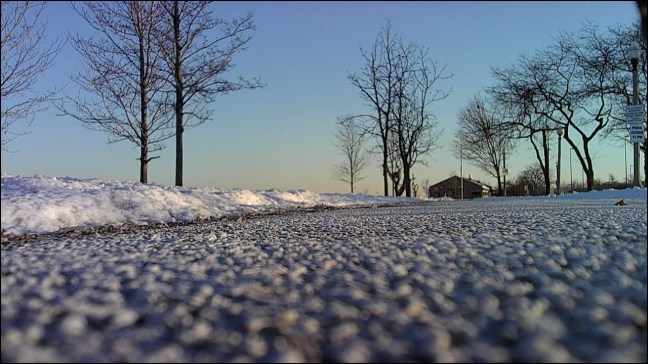 I set the device on an empty lakefront path and prepared for liftoff. After a few technical glitches (faulty propellers, low battery and an “unpaired” remote control), the drone shot up in the air. Surprised by its quick motion, I furiously held onto the controller in order to steer the aircraft. While trying to steer and keep the drone in sight, I toggled back and forth between my mounted smartphone, snapping photos and as much video that would stream to my phone.
But instead of hovering in place, the DX-4 glided easily over the snow drifts toward Lake Michigan. Despite my navigation (admittedly frantic at this point), the device blew east over the water as the relatively light wind carried it away instead of hovering in place, as I’d directed it — or thought I had.
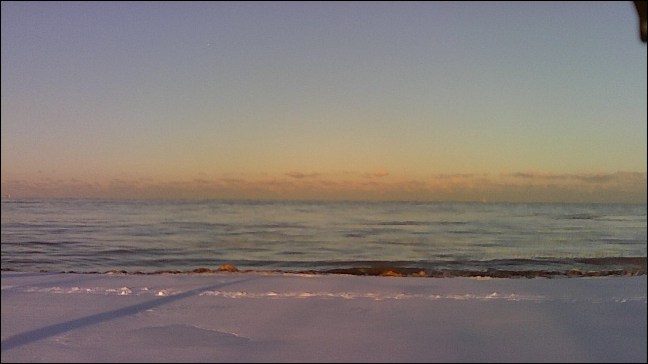
YouTube does show a few users whose drones, including a DX-4, left and never returned, but I didn’t anticipate it happening to me. The YouTube users looked just as stunned as I did when their frantic navigation could not retrieve their devices.
Flight 2: Different beach, same mistakes
The same day my DX-4 was lost at sea, I purchased the Sky Viper and prepped it for takeoff the next day. I found a new beach much farther from the city that had less snow and more room for me to follow the drone as it circled the area and shoot a much wider shot of Chicago’s lakefront about five miles south of my inaugural flight. I’d also hoped that, with more beach area, my drone could land (or crash) to the ground if necessary, and I could retrieve it and not lose it like I had the first one. Again I’d planned a beautiful but chilly midday flight, and there wasn’t another soul in this public park that might be endangered by it.
Flight prep on this afternoon went smoothly — no technical glitches to slow the process. And this time, I set up my iPad inside my car to record the flight because I’d regretted not recording footage of my lakeside adventure the first time.
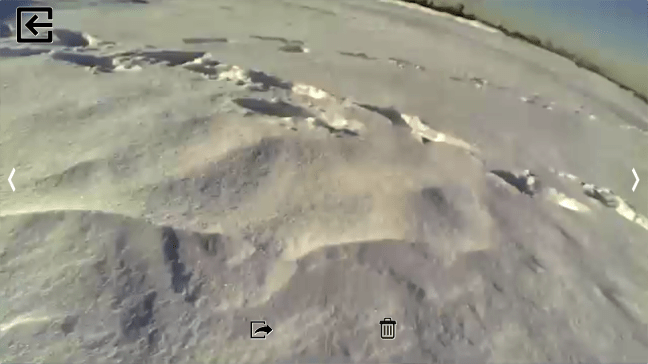
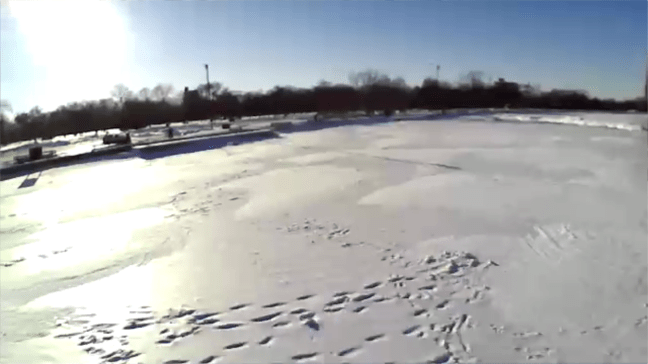
It was a good decision to let iPad record the event because, as it turned out, that’s the only usable footage I was able to capture of another flight foiled by wind. The exact same thing happened after I launched the Sky Viper — instead of hovering, it glided seamlessly toward the lake. My iPad movie shows me toggling between its livestream to my iPhone — trying get at least one publishable shot of the city skyline — and watching the aircraft itself. The drone itself captured only two wide shots of the snow before it apparently crashed. I captured no video at all from the Sky Viper. Nor did I see exactly where it landed on the beach to retrieve the drone. And since I was alone, I chose not to search for it for fear of mistakenly stepping onto an ice patch. So I was left with only a brief moment of video on my iPad of the drone’s launch and two images of the snow that streamed from the drone at different altitudes as the aircraft blew away.
Conclusions
Livestreaming woes. Toggling between livestream and eye-level sight of the drone was difficult. I eventually lost its location over the water and did not see where it may have flown — or crashed — so that I could possibly retrieve it. So though I did capture a 15-second video of its flight, I lost the drone. Still, I’m glad to have had the streaming footage for photos and video because, if I’d had to rely on an internal SD card to retrieve images from the device post-flight, I’d have nothing to show for my endeavor. So the livestream-to-smartphone drones are still preferred, though it requires a high level of multitasking.
Cheap tradeoffs. Inexpensive drones are ill-equipped with GPS systems that help it locate its base should it lose its way from its owner. Also, the cheaper devices are more susceptible to weather and can’t stand up to wind and may be prone to crashes. Pricier drones, such as DJI models, are better equipped to withstand the elements and navigate their way back to the owner’s location using GPS should he/she lose control of the device.
Ask for volunteers. As newsrooms begin to adopt this technology, allow journos who feel tech savvy to train on it before requiring it of everyone. That may lead to fewer operator errors such as crashes and disappearing UAVs.
Tech effectiveness
In order to get publishable content from low-cost equipment, in-depth flight simulation will be an important part of training journalists how to navigate a UAV. Thankfully, some drones, including the Sky Viper, have apps specifically for practicing with its remote controller if it’s unfamiliar to a user. Journalists should be given extensive time in practice before they actually use a device to cover a story. That way, when mishaps occur, it’d be in the training stages with cheaper equipment, before a more sophisticated drone is used to cover a story and increasing the risk of safety hazards.
The potential to get striking images from drones is substantial. At 1080 HD, the DX-4, for example, provides footage that is suitable for Internet platforms such as YouTube or Netflix. News organizations could bolster their own YouTube channels and websites with full-definition video and still shots from a $60 drone. The rise in web traffic, social sharing, brand engagement and potential ad revenue would be invaluable. The Sky Viper’s panoramic video is touted as having similar potential, but its video quality is questionable based on YouTube reviews and footage I captured with my drone.
Drone technology is quickly merging with more social media platforms, which are the honor boxes of the digital age. This year, DJI drones introduced the capacity to stream to Facebook Live. The implications of that advancement are huge for journalism, which is now a mobile- and social-first platform where audiences first encounter the news. The ability to send a reporter to cover a Black Lives Matter protest or Lollapalooza with a livestream to a news agency’s FB LIVE page puts audiences at the center of stories when they occur and taps into the urgency of getting the news out now that has evolved in the digital era. However, a DJI Phantom 3 is not a low-cost device — it runs around $399. So its use would be for the journalist who has become proficient on the cheaper-model drones.
The effectiveness of my drones’ cameras was mixed: The DX-4 met expectations and the Sky Viper did not. But the potential for both in the category of low-cost devices to be vital tools for journalist training can’t be overstated.
Improvements
The drones I used could be improved to bolster navigation and usability. The DX-4 already has evolved in this area, offering a box-like remote that gives the users’ hands more space to hold onto the controller. The Sky Viper controller has grips more like handle bars that gave me less confidence but may be perfectly comfortable for someone with experience using gaming technology.
The innovation needed to simplify the toggling action between the sky and the smartphone screen may be far in the future. But I’d suggest adding to drone apps a dual-view option that allows the user to see on the smartphone screen a drone’s location in the sky next to the view from that drone’s camera. Or perhaps an inset view of a drone’s built-in GPS mapping, so that its location can be tracked while capturing footage. This solution would be similar to an airplane pilot using dashboard instruments to guide his plane instead of looking out of the window to steer. That may help solve the multitasker’s toggling hazard.
Future
I think drones are quickly replacing the Skycam and rented copter flights that journalists use to cover daily events such as weather, sports and traffic. They will not just be highly used in crises that are widespread such as wildfires or drought, where aerial footage has been essential in accurate storytelling. The more stories that can be told simply and cost effectively with drones, the more its daily use will prompt the embrace of cheaper drones to equip journalists.
Increased mobility of drones will also increase their accessibility and use. There are already toy drones sold now that fit into the palm of one’s hand — soon such drones will have cameras and be used by journalists. As these devices become more streamline, the cost of buying them for reporters in a newsroom will decrease. And in the same way that mainframe computers evolved into personal computers and now to smartwatches, drones will become more portable, allowing journalists to employ them on-the-go more easily and without a partner to assist.
I don’t think it’s too far-fetched to consider drones and 360 cameras to be the pen and notepads of journalism’s future. These will become the essential storytelling tools needed to cover immersive stories that readers expect.
 CMSU Reflections